A conflict resolution strategy

If You Are Safe,
I Am Safe

Turning the desire for safety from a cause of conflict
into the foundation of peace

A communications-led strategy for inter-communal reconciliation, tested in conflict zones across the world and proven to resonate across sectarian, ethnic and political divides.

94.9% of Baghdadis agreed with the message
88.4% said it made them more hopeful
3 active conflict zones: Iraq, South Sudan & beyond
Discover the approach ↓
Scroll

Security is not a competition.
It is a shared endeavour.

The central insight of 'If You Are Safe I Am Safe' is simple but transformative: in conflict-ridden societies, people typically pursue safety at the expense of others. We argue the opposite — that genuine, lasting security can only be achieved together.

When communities feel threatened, they threaten back. This is not ideology — it is social psychology. Perceived threat is the engine of inter-communal violence. Remove the threat perception, and the cycle breaks. That is what this strategy is designed to do.

The message works because it is universally understood, not easily manipulated, and crosses sectarian, ethnic and political lines. It does not require communities to abandon their identities or forget their grievances. It asks only that they recognise a shared interest in each other's safety.

"Unless we are all safe — individually and as communities — none of us can be entirely safe."

This is not an abstract principle. It is a communications strategy backed by research, tested in live conflicts, and validated by the people living through them.

01 — Word

The Message

A single, powerful idea communicated through mass media, community networks, and face-to-face dialogue. Simple enough to spread, precise enough to change minds.

02 — Symbol

The Symbol

Visual identity that transcends language barriers, enabling the message to travel across diverse communities, media formats, and cultural contexts.

03 — Deed

The Action

Concrete reforms — in policing, governance, resource distribution — that make mutual safety a reality on the ground, not just a slogan.

04 — Scale

Scalability

Applicable from neighbourhood to national level. From a single district of Baghdad to a whole country. The framework scales to the conflict.

Taking the message
to millions

In April and May 2018, the 'If You Are Safe I Am Safe' promotional film was broadcast repeatedly across all Iraqi state television channels — reaching millions of Iraqis across sectarian divides.

↑ Promotional film — broadcast on all Iraqi state television channels, April–May 2018

Roderick Crawford presents the Iraq communications plan

Roderick Crawford explains 'If You Are Safe I Am Safe' to Iraqis

How it works

01

Identify the threat dynamic

Perceived threat — not ancient hatreds — drives inter-communal violence. Communities that feel threatened behave threateningly. This is the cycle to break.

02

Deploy a communications strategy

Mass media, community leaders, and peer-to-peer networks carry the message simultaneously. State television, social media, workshops, and printed materials all reinforce the same idea.

03

Build the evidence base

Surveys measure comprehension, agreement, emotional response and willingness to act. Data from Baghdad confirms the message works — across Sunni and Shia communities alike.

04

Create advocates

Train local leaders to carry the message into their own communities. The framework multiplies through local ownership — as demonstrated in Malakal's Protection of Civilians site.

05

Reform to make it real

Institutional reform — impartial policing, equitable governance, fair resource distribution — turns the message into lived reality and sustains the change.

06

Scale to context

The approach adapts from neighbourhood to national level, and from sectarian conflict (Iraq) to ethnic and political conflict (South Sudan) to the world's most intractable disputes.

Evidence from Baghdad, 2018
372 residents across 5 districts

94.9%

agreed with the message 'If You Are Safe I Am Safe'

Across Sunni & Shia majority districts

88.4%

said the message made them feel more hopeful

Of those, 77% said "strongly" more hopeful

93%

said an Iraq based on this message would be a better place to live

98.4%

agreed government should not advantage any one sect over another

Highest positive response in the entire survey

91.7%

said they would help make 'If You Are Safe I Am Safe' a reality in Iraq

Where we work

The 'If You Are Safe I Am Safe' strategy has been applied to active conflicts in Iraq and South Sudan, and its application to further conflicts — including Yemen and Israel/Palestine — is under active development.

Iraq

Active Programme

Iraq is the flagship application of the 'If You Are Safe I Am Safe' framework. Following the defeat of ISIS and the acute sectarian divisions of the post-2003 period, Iraq presented both an urgent need and a genuine opportunity for a communications-led reconciliation strategy.

The programme developed a mass communications campaign — including the promotional film broadcast across all Iraqi state television channels in April and May 2018 — alongside a rigorous survey of 372 residents across five Baghdad districts with contrasting sectarian compositions: the Sunni-dominated Adamiya, Shia-dominated Amil, mixed Hurriya, Saba Abkar and Saidiya.

The results were striking: agreement with the message held at over 90% across all districts and both major sects, confounding assumptions that sectarian division made such consensus impossible. Crucially, those who felt most threatened were also the most likely to embrace the mutual safety framework — validating the core theoretical insight.

The Iraq programme demonstrates that the message works as both a cognitive proposition and an emotional one: 88% of respondents said it made them more hopeful, with the vast majority of those saying "strongly" more hopeful.

South Sudan

Active Programme

South Sudan presents a different challenge to Iraq: here the primary drivers of conflict are not sectarian but ethnic and political — the mobilisation of ethnicity in political struggles, compounded by a legacy of civil war, weak administration, youth unemployment, and competition for resources.

The 'If You Are Safe I Am Safe' strategy for South Sudan proposes to turn the desire for safety from a competitive, conflict-causing endeavour into a cooperative, peace-building one. Drawing on the well-established institution of the inter-tribal conference, the approach works with local administration and community leaders to build mutual security from the ground up.

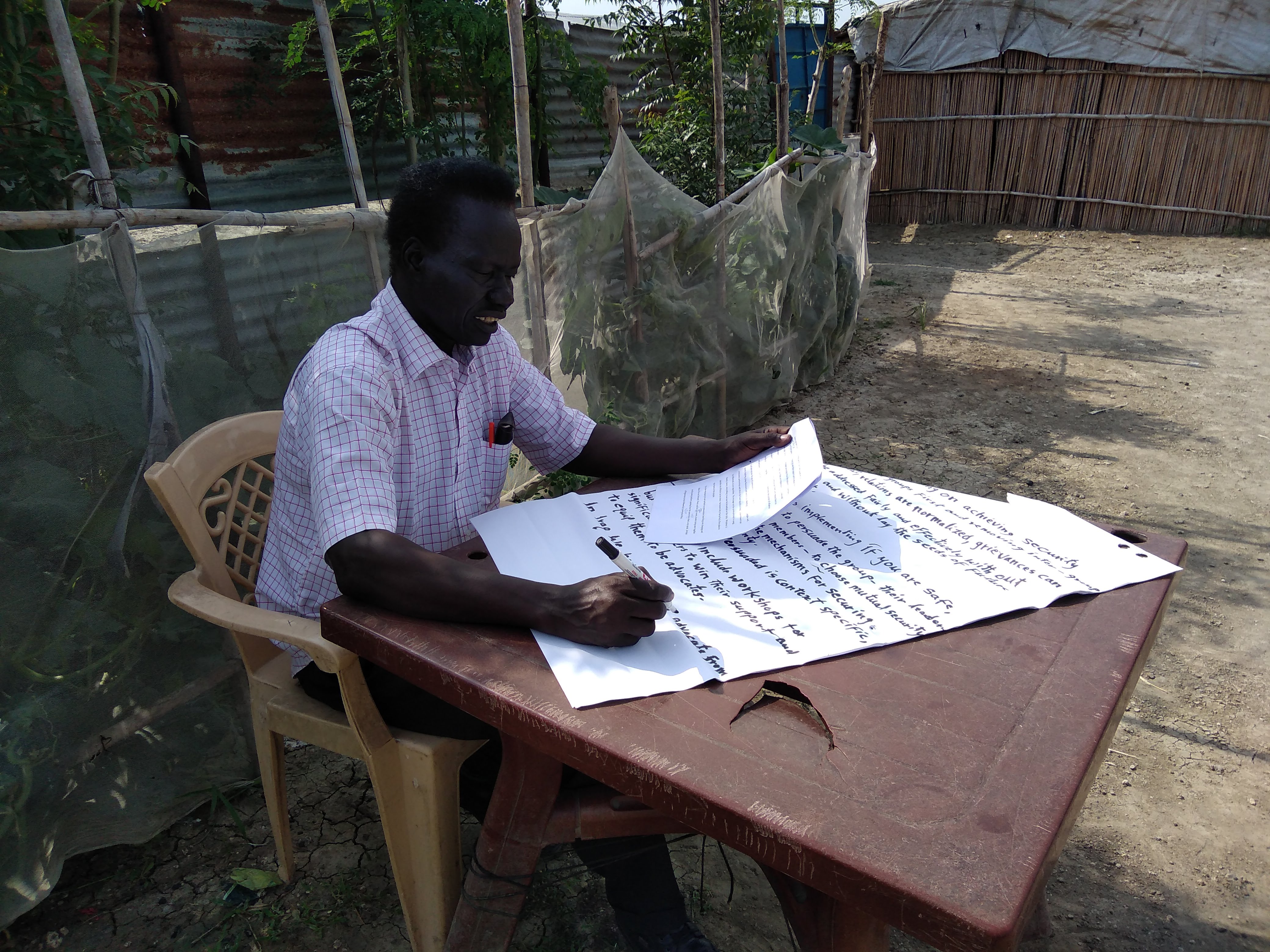
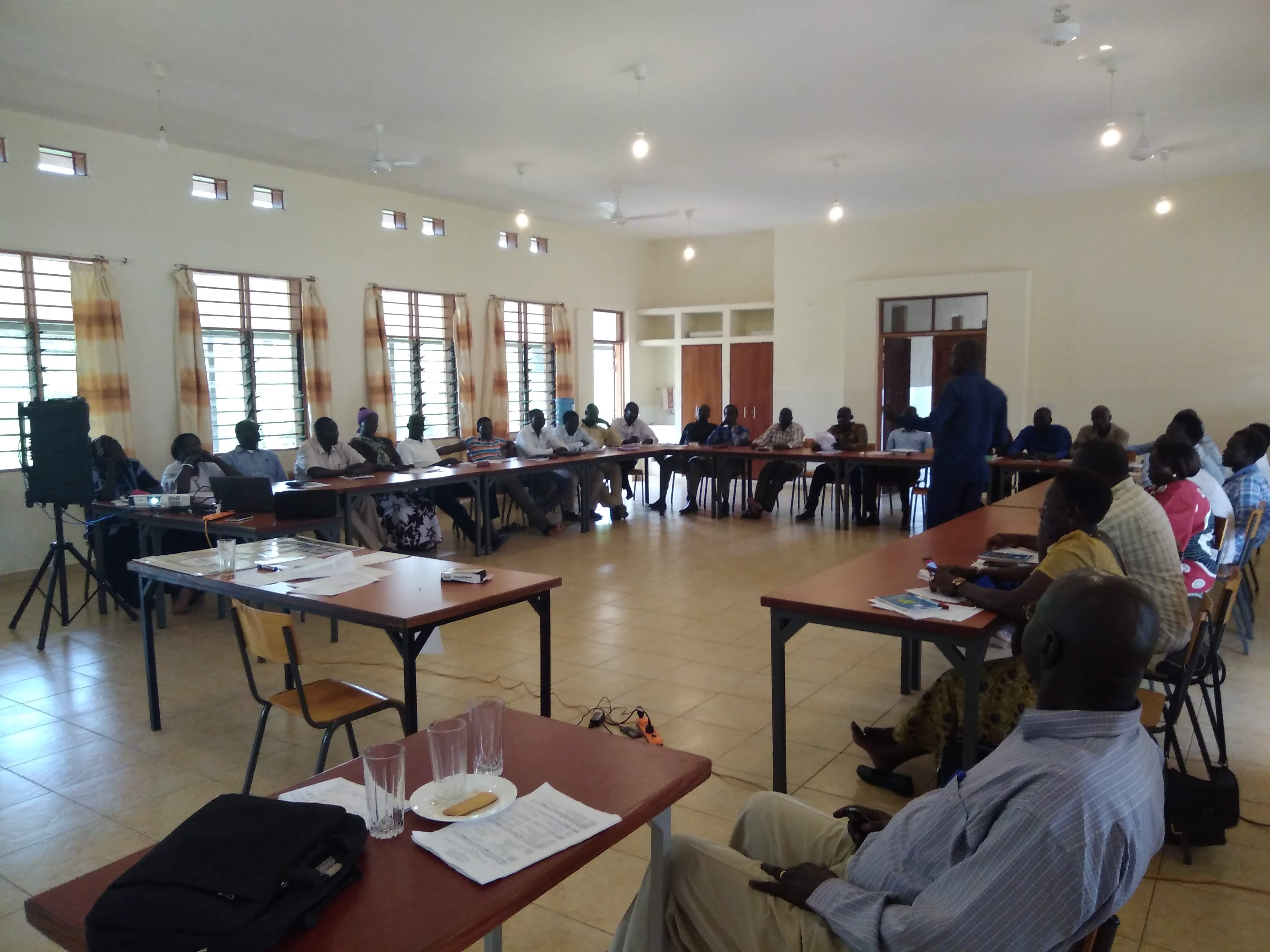
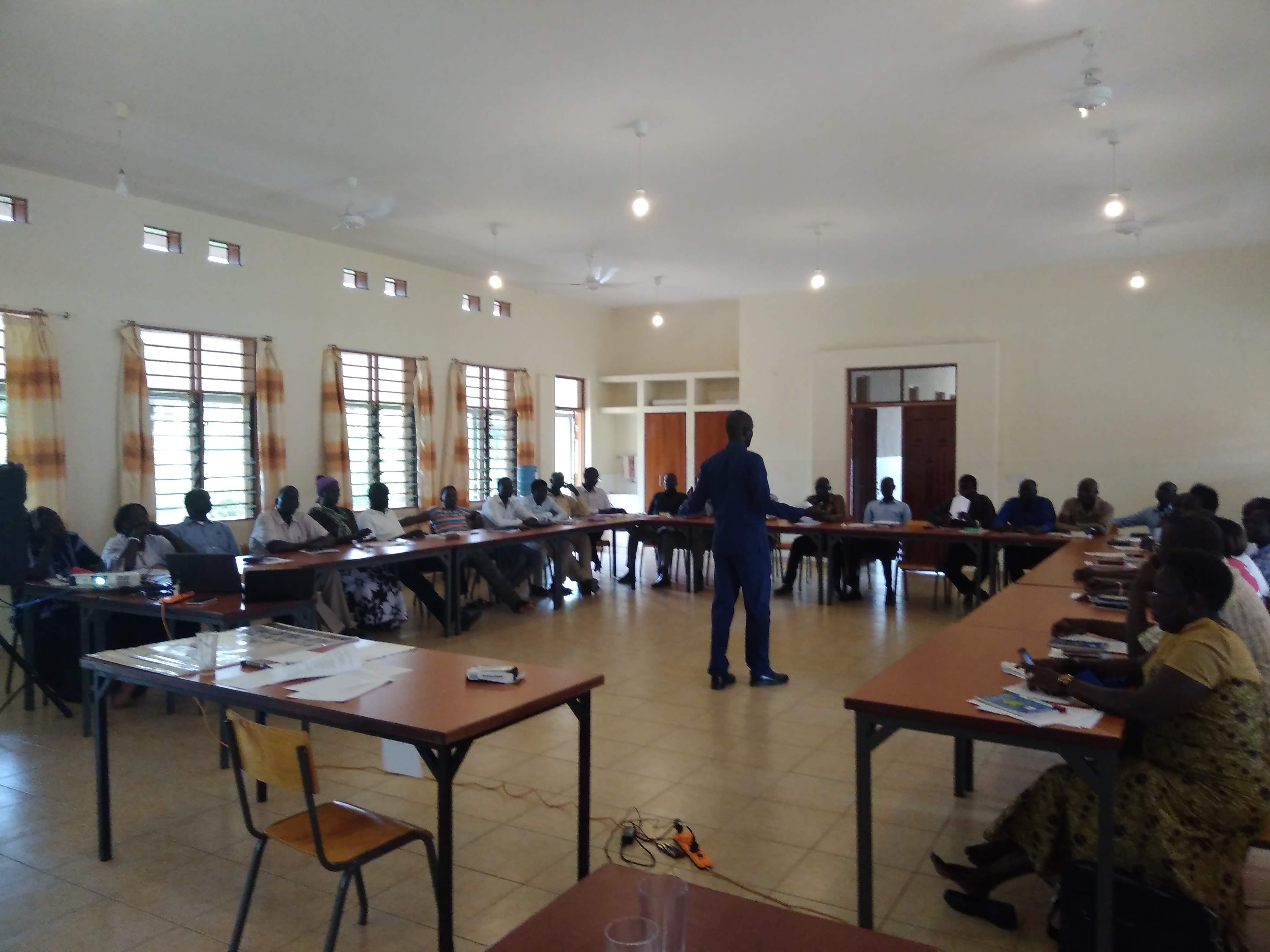
Workshops were held in Malakal — including inside the UN Protection of Civilians site, one of South Sudan's largest displacement camps, housing communities from multiple ethnic groups living in close proximity under extreme stress. Local leaders, trained in the framework, carried the message into their own communities in local languages.

The South Sudan conflict analysis was written by Douglas H. Johnson, one of the world's leading historians of Sudan and South Sudan, author of The Root Causes of Sudan's Civil Wars and South Sudan: A New History for a New Nation.
📄
South Sudan Conflict Analysis Douglas H. Johnson

Two women from Malakal repeating "If you are safe, I am safe"

Local community leader leading a workshop, Malakal city

Michael Char trains local people to share the message, UN Protection of Civilians site, Malakal (in local language)

Israel & Palestine

Prospective Application

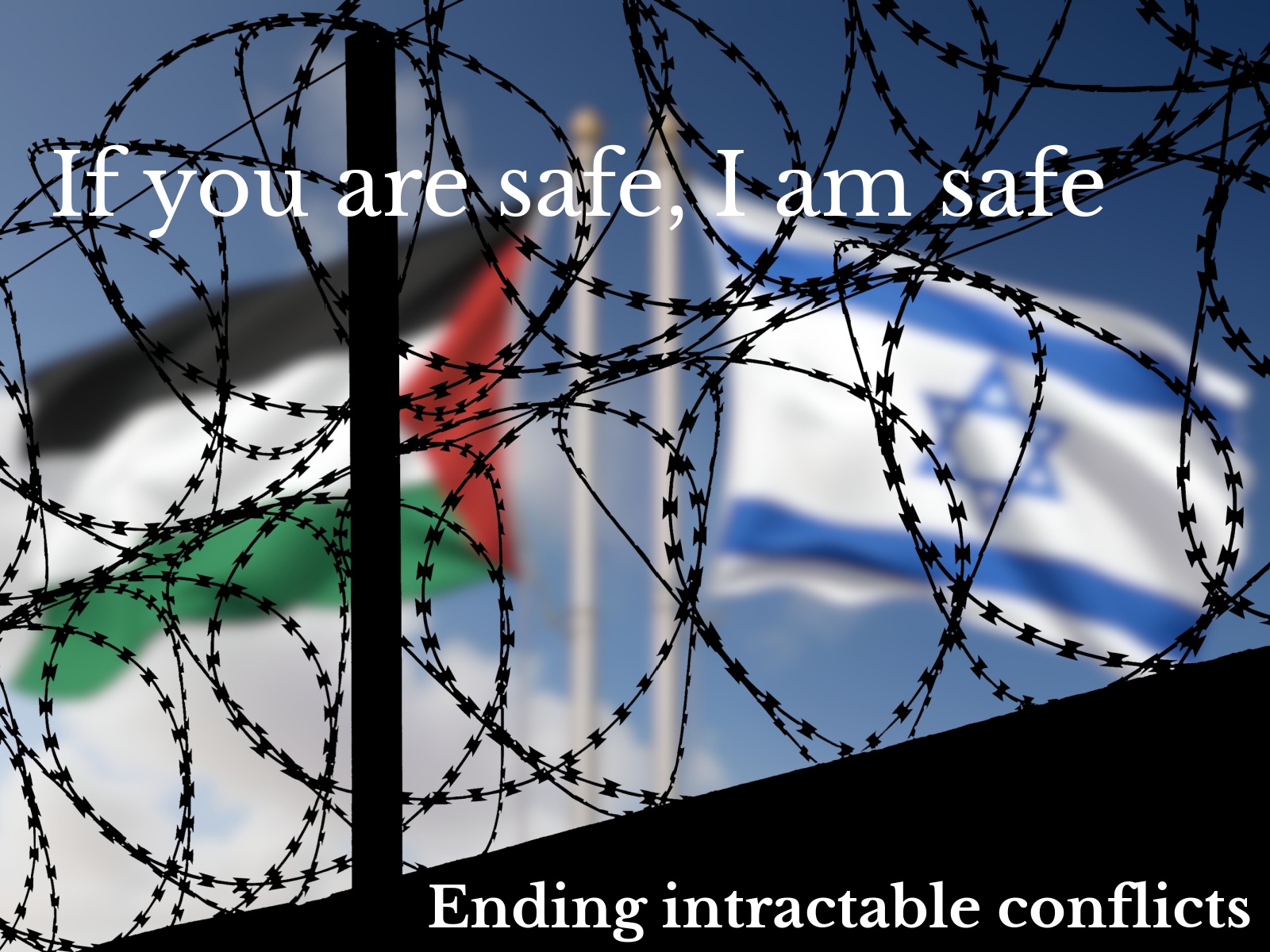
'If You Are Safe I Am Safe' has the potential to work everywhere. The principle — that when we both look after each other's security, threat levels fall and the space for extremism shrinks while incentives for cooperation rise — applies no less to the Israeli-Palestinian conflict than to Iraq or South Sudan.

No programme has yet been run here. But the analytical groundwork has been laid, and the framework offers something that conventional diplomacy has consistently failed to provide: a way of reframing the two-state solution not as a concession extracted under pressure, but as a mutual investment in each other's security.

Palestinians cannot feel safe without a state. Israelis cannot feel safe without genuine security guarantees. The 'If You Are Safe I Am Safe' framework recognises both needs as legitimate — and argues that they are, in fact, the same need.

Being 'safe' deters politicians on both sides from pursuing maximalist or extremist strategies, because their publics would oppose them. Safety itself becomes the political constraint on escalation.

The events of 7 October 2023 have made practical implementation much harder. But the logic of mutual security has not been invalidated — if anything, the catastrophic consequences of its absence have been made more visible than ever.
What Baghdad told us

In March and April 2018, 372 residents were surveyed across five Baghdad districts, each with a different sectarian composition. The survey was designed and carried out by al-Nahrain University and analysed with support from Durham University.

The districts were selected to test the message under the most demanding conditions — not in sympathetic communities, but across Sunni-dominated, Shia-dominated, and mixed areas that had all lived through acute sectarian violence.

The results consistently exceeded expectations. Agreement with the message was remarkably stable across all districts and both major sects. The message worked cognitively — people understood it — and emotionally: it generated genuine hope.

A crucial finding: those who felt most unsafe and most threatened as a community were more likely to strongly agree with the message — not less. Fear, in other words, is not an obstacle to mutual safety. It is the very reason people want it.

Adamiya

Sunni-dominated — 75 surveyed

Amil

Shia-dominated — 100 surveyed

Hurriya

Shia majority, Sunni minority — 50 surveyed

Saba Abkar

Sunni majority, Shia minority — 48 surveyed

Saidiya

Mixed Shia-Sunni district — 99 surveyed

94.9%

agreed with the message 'If You Are Safe I Am Safe'

88.4%

said the message made them feel more hopeful

93%

said an Iraq based on this message would be a better place to live

91.7%

said they would personally help make it a reality

98.4%

agreed government should not advantage any one sect over another

90.3%

said reconciliation between communities is necessary for Iraq's peace

92.2%

said reconciliation is necessary for their own personal safety

89.5%

said they would spread the message themselves

What others say

This is a serious, well-researched and potentially important contribution to the search for stability and reconciliation in Iraq.

Lord Bew of Donegore

Chair, House of Lords Appointments Commission; Professor of Irish Politics, Queen's University Belfast; advisor to the Northern Ireland peace process

The principle of mutual security — that my safety depends on yours — is the foundation on which lasting peace must be built. This framework offers a practical path to that principle.

Douglas H. Johnson

Author, The Root Causes of Sudan's Civil Wars and South Sudan: A New History for a New Nation

Who we are

Roderick Crawford, Director — If You Are Safe I Am Safe

If You Are Safe I Am Safe is an independent conflict resolution organisation founded by Roderick Crawford.

Roderick Crawford is a writer, editor and conflict resolution practitioner. He was editor of Parliamentary Brief and has contributed to peace processes in Northern Ireland and beyond. His approach draws directly on the lessons of the Northern Ireland peace process — particularly the period from 1969 to the Good Friday Agreement of 1998 — as a model for what communications-led conflict resolution can achieve.

The Northern Ireland experience is foundational to the framework. A society that had endured thirty years of sectarian violence, deep institutional distrust, and entrenched community fear was transformed — not simply through political negotiation, but through a sustained process of changing what safety meant and who it included. 'If You Are Safe I Am Safe' applies those lessons to conflicts in the Middle East, Africa, and beyond.

The organisation works with academic partners — including al-Nahrain University in Baghdad and Durham University — and with leading scholars in the fields of conflict, history, and social psychology to develop evidence-based approaches to reconciliation.

The theoretical foundation of the strategy is grounded in Intergroup Threat Theory — the established social science evidence that perceived threat, not ancient hatred, is the primary driver of inter-communal violence. Remove the perception of threat, and the dynamic changes. That is what the message is designed to do.

If You Are Safe I Am Safe is a charity registered in England and Wales.

Company registered in England and Wales — No. 9515795

Charity Commission Registration — No. 1187219

Northern Ireland Model

The peace process from 1969 to 1998 provides the foundational case study — showing how communications-led strategy can change political atmosphere before formal settlements.

Academic Partners

Survey design and analysis in partnership with al-Nahrain University, Baghdad, and Durham University. South Sudan analysis by Douglas H. Johnson (Oxford/James Currey).

Intergroup Threat Theory

The framework is grounded in peer-reviewed social psychology: communities that feel threatened are more likely to threaten in return. Reducing perceived threat breaks the cycle.

Iraqi State Television

The promotional film was broadcast across all Iraqi state TV channels in April and May 2018 — evidence of institutional buy-in at the highest level.

Support our work

The conflicts where 'If You Are Safe I Am Safe' can make a difference are many. Expanding the programme to Yemen, deepening the work in Iraq and South Sudan, and developing the case for Israel/Palestine all require resources and partners.